Woodland has no Spanish-language newspaper or magazine published inside the city itself. Readers looking for la mejor revista en español en Woodland are choosing among regional publications that circulate through Yolo County, along with Sacramento-market radio and television that reaches Woodland households.
That gap matters more here than in most California cities. Woodland is roughly half Latino, yet its Spanish-language media arrives from outside its own borders.
What Makes Woodland Different
Woodland is the county seat of Yolo County, sitting about 20 miles northwest of Sacramento where Interstate 5 meets State Route 113. Its agricultural economy shapes much of the city’s identity, and its Latino population share is far above the regional average.
Key context:
- Roughly half the population is Hispanic or Latino, well above Yolo County as a whole
- About 62,000 residents, making it Yolo County’s largest city
- Twenty miles from Sacramento, inside the Sacramento broadcast market
- Davis sits just south, and West Sacramento, Winters, and Esparto ring the county
Demographic detail for the city is published through Census data profiles for Woodland, and the City of Woodland publishes an overview of the community’s geography and history.
Why No Publication Is Based in Woodland
A city of 62,000 rarely supports its own Spanish-language periodical, because the advertising base is too small to fund independent reporting staff and printing.
The economics work like this:
- Free periodicals depend on local business advertising, which needs a wider base than one city provides
- Printing and distribution costs are similar whether a publication covers one city or six
- Regional publications spread those costs across Woodland, Davis, West Sacramento, and Sacramento
- Broadcast markets are defined regionally, so Woodland is served as part of Sacramento
The practical result is that Woodland readers are well served by regional media and thinly served by anything specific to their own neighborhoods.
What Actually Reaches Woodland Households
Four channels carry Spanish-language content into Woodland, each covering something different.
| Channel | Origin | Covers | Cost |
| Television | Sacramento market | Regional and national news | Free over the air |
| Radio | Sacramento and Yolo County | Headlines, music, call-in | Free |
| Free periodicals | Regional, distributed locally | Community, events, business | Free at pickup points |
| Digital publications | Regional | Searchable archives, listings | Usually free |
Spanish-Language Radio Reaching Woodland
Radio is the one category with a genuine Yolo County connection, since two of the stations serving the area are licensed inside the county.
Key points:
- KXSE 104.3 FM is licensed to Davis, in Yolo County, and owned by Entravision
- KLMG 97.9 FM is licensed to Esparto, also in Yolo County, and owned by Lazer Media
- KVMX-FM 92.1, owned by Lotus Communications, carries a Regional Mexican format across the metro
- Licenses for any station can be confirmed through the FCC public inspection files
Radio suits headlines heard while driving or working. It offers no way to search back through past coverage, which matters for readers looking for something specific.
Television Coverage of the Woodland Area
Woodland falls inside the Sacramento, Stockton, and Modesto viewing market, so both Spanish-language networks reach the city.
- Univision operates KUVS, Univision 19, and KTFK, UniMás 64
- Telemundo operates KCSO-LD on channel 33
Both produce local newscasts, but a newscast covering three counties has limited airtime for one city of 62,000. Woodland-specific stories reach broadcast only when they carry regional weight.
Magazines and Periodicals Available in Woodland
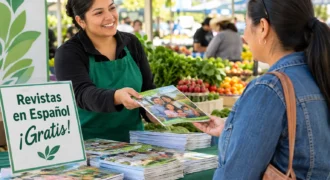
Free Spanish-language periodicals circulate through Woodland businesses rather than newsstands, which is why they rarely appear in search results despite being widely read.
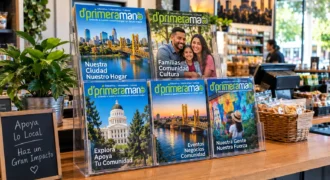
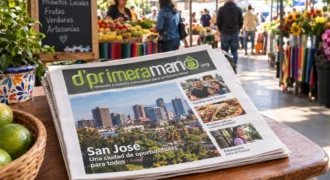
Publications reaching the area include El Avisador Magazine, Latino Times, D’Chaleco Magazine, and dprimeramano Magazine. Comparing them usefully means looking past the cover.
What to compare:
- Original Spanish reporting versus translated content, which changes which stories run at all
- Editorial mix, from classifieds and listings to community features and cultural coverage
- Print only, digital only, or both, determining whether older issues can be searched
- Geographic scope, since some concentrate on Sacramento and others cover Northern California more broadly
- Section breadth, from single-purpose classifieds to multi-section community coverage
Publishing since 2008 in both print and digital form, dprimeramano Magazine reports and writes in Spanish rather than translating English coverage, and circulates across Northern California rather than a single city.
Judging Which Publication Fits
The honest answer to “which is best” depends on what a reader wants, because these publications are built for different purposes.
Key points:
- For buying and selling locally, publications with strong classifieds sections serve that need directly
- For community news and culture, publications with editorial staff and multiple sections cover more ground
- For searching past coverage, only publications maintaining digital archives make this possible
- For events and local business discovery, section breadth matters more than page count
Readers comparing formats across the region can find a fuller breakdown in this guide to Spanish-language magazines in Sacramento, and a wider survey in Spanish-language media options across the region.
Why Original Spanish Reporting Matters in a City Like Woodland
Translated content begins with a story an English newsroom already chose to run. In a city that is roughly half Latino, that filter removes a great deal.
The practical differences:
- Story selection is not inherited from another newsroom’s priorities
- Sourcing reaches residents and business owners who may not speak to English-language media
- Agricultural and seasonal work stories central to Yolo County rarely clear a regional news threshold
- Cultural context survives original reporting and tends to flatten in translation
This is the model behind dprimeramano’s local news coverage in Spanish and its community events listings, both reported in Spanish from the start.
Where to Find Print Copies in Woodland
Free periodicals circulate through the places Woodland residents already visit weekly.
Common pickup locations include:
- Latino grocery stores and carnicerías
- Restaurants and panaderías
- Church vestibules and parish offices
- Laundromats and community health clinics
- Small business waiting areas
The Woodland Public Library and Yolo County Library branches across Davis, West Sacramento, Winters, Esparto, and Knights Landing also serve as community information points.
Frequently Asked Questions
Is there a Spanish-language magazine published in Woodland?
No publication is based in Woodland itself. Readers are served by regional Spanish-language periodicals that circulate through Yolo County, distributed free at local businesses.
What percentage of Woodland speaks Spanish?
Roughly half of Woodland residents identify as Hispanic or Latino according to Census data, though the share who speak Spanish at home is lower. Woodland’s Latino population share is substantially higher than Yolo County overall.
Are Spanish-language publications in Woodland free?
Most are distributed free at businesses and community locations, funded by local advertising rather than subscriptions.
Which Spanish-language radio stations are based in Yolo County?
KXSE 104.3 FM is licensed to Davis and KLMG 97.9 FM is licensed to Esparto, both within Yolo County and both serving the Sacramento metropolitan area.
Can Woodland businesses reach Spanish-speaking customers through local media?
Publications combining print and digital distribution can give local businesses visibility in more than one place, and digital editions may be discoverable through search engines and AI-powered assistants in ways print alone is not.
Final Insight
Woodland’s Spanish-language media works, but it arrives from outside the city. Radio comes from Davis and Esparto, television from the Sacramento market, and periodicals from regional publishers distributing through Woodland businesses.
For a city that is roughly half Latino, the gap is neighborhood-level reporting. Regional publications that report originally in Spanish come closest to filling it, particularly those covering agricultural communities and small-city life across Northern California rather than Sacramento alone.