Sacramento
--°F
![Weather]() Loading...


@dprimeramanomagazine
Sacramento sits where the Sacramento and American rivers meet, which shaped both its Gold Rush history and the parkland that runs through it today. The city holds more than thirty museums, a restored riverfront district, a state capitol open to the public, and a farm-to-fork food scene built on the farmland surrounding it.
This guide covers what there is to do across the city and the surrounding region, organised by the kind of outing rather than by a ranked list, so families, couples, visitors and residents can each find the part that applies to them.
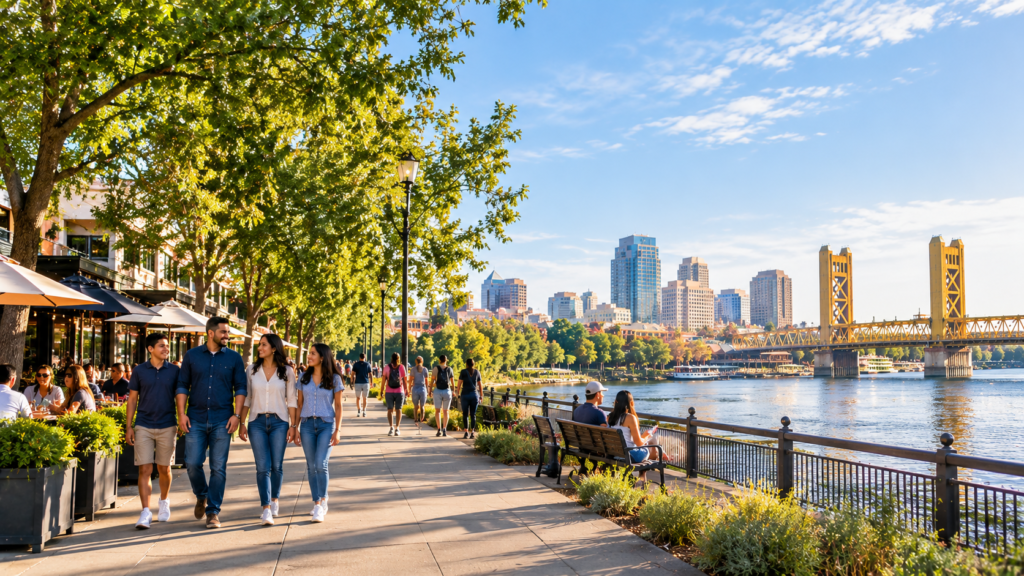
The Old Sacramento Waterfront is the starting point for most visitors. Its restored Gold Rush-era blocks sit directly on the river, with wooden sidewalks, museums, shops and restaurants packed into a walkable district beside the Tower Bridge.
The area works as a half-day on its own, and it is where most first-time visitors start. Current listings and opening details for the district are maintained by Visit Sacramento.
Sacramento has over thirty museums, which makes it a strong rainy-day or hot-afternoon city. Summer temperatures regularly pass 100°F, so indoor options matter more here than in most California cities.
Several of these sit within walking distance of each other downtown, which makes a museum day straightforward without moving the car.
A good share of the city costs nothing. The state-run sites, the parks and the river trail cover most of a weekend without a ticket.
Free events, festivals and community gatherings are listed through community event coverage as they are announced.
William Land Park in South Sacramento holds three separate family attractions in one place, which is the single most efficient family outing in the city.
Land Park itself has open lawns, a pond and shaded picnic areas, so a zoo visit extends into a full day without extra cost.
The American River Parkway runs roughly thirty miles from Discovery Park to Folsom Lake, and it is the feature that most distinguishes Sacramento from other inland California cities. Locals use it far more than visitors do.
Sacramento’s Latino community shapes a substantial part of the city’s cultural calendar, particularly around Día de los Muertos, Cinco de Mayo and the summer festival season. Several organisations programme year-round.
Ongoing coverage of these organisations and their programming appears through cultural reporting across the region.
Sacramento calls itself America’s Farm-to-Fork Capital, and the claim rests on the farmland surrounding the city rather than on the restaurants alone. Produce here travels a short distance.
Local restaurant coverage and new openings run through food and restaurant reporting.
Midtown carries most of the city’s evening activity, concentrated in a walkable grid of numbered and lettered streets. The R Street Corridor has developed into a second cluster of bars and music venues.
Sacramento’s position makes it a practical base. Several well-known destinations sit within a two-hour drive.
The calendar shifts considerably through the year, and several of the city’s largest events are annual fixtures worth planning around.
Dates shift annually, so current listings are published through event coverage as organisers confirm them.
A few local realities affect planning more than most guides mention.
What is Sacramento best known for?
Its Gold Rush history, the California State Capitol, the Old Sacramento Waterfront, the American River Parkway and its farm-to-fork food scene.
What are the top things to do in Sacramento?
The Old Sacramento Waterfront, the California State Railroad Museum, the Crocker Art Museum, the State Capitol and Capitol Park, the Sacramento Zoo in William Land Park, and the American River Parkway.
What free things are there to do in Sacramento?
Capitol Park, free tours of the State Capitol, the American River Parkway and its trails, McKinley Park rose garden, the Historic City Cemetery and the monthly Second Saturday art walk.
What is there to do in Sacramento with kids?
William Land Park holds the Sacramento Zoo, Fairytale Town and Funderland together. The Sacramento Children’s Museum, Effie Yeaw Nature Center and the Railroad Museum also work well for families.
What is there to do in Sacramento for adults?
Midtown and the R Street Corridor for food and nightlife, Second Saturday, Golden 1 Center for Kings games and concerts, and wine tasting in Clarksburg or the Amador foothills.
How many days do you need in Sacramento?
Two days covers the main attractions. A third allows a day trip to the Delta, Folsom or the foothills.
When is the best time to visit Sacramento?
Spring and autumn. Summer regularly exceeds 100°F, and winter brings fog and rain, though both seasons still work for indoor attractions.
If you’re a business owner, let’s talk. Discover how our magazines with local reach in Sacramento can help you grow visibility, trust, and customers—all in one place.